


In the past few decades, magnetic refrigeration has emerged as a cutting - edge alternative to traditional vapor - compression refrigeration. This technology leverages the magnetocaloric effect (MCE), which is the heating or cooling of a magnetic material when it is exposed to a changing magnetic field. As a leading supplier of Bullet Shaped Magnets, I am often asked whether our unique - shaped magnets can be utilized in magnetic refrigeration systems. In this blog, we will delve into the science behind magnetic refrigeration, examine the properties of bullet - shaped magnets, and discuss their potential applications in this exciting field.
The Principles of Magnetic Refrigeration
The foundation of magnetic refrigeration lies in the magnetocaloric effect. When a magnetic material is placed in an external magnetic field, its magnetic moments align. This alignment leads to a decrease in the magnetic entropy of the material. According to the laws of thermodynamics, the total entropy of an isolated system must remain constant (in an adiabatic process). So, when the magnetic entropy decreases, the thermal entropy must increase, causing the material to heat up.
Conversely, when the magnetic field is removed, the magnetic moments of the material become disordered again. This increases the magnetic entropy, and to maintain the overall entropy balance, the thermal entropy decreases, resulting in the cooling of the material. This cycle of heating and cooling can be harnessed to create a refrigeration system.
Typical magnetic refrigerants are materials with large magnetocaloric effects. Some well - known magnetocaloric materials include gadolinium (Gd), its alloys, and certain intermetallic compounds. These materials need to be exposed to a varying magnetic field, which is usually provided by magnets.
Properties of Bullet Shaped Magnets
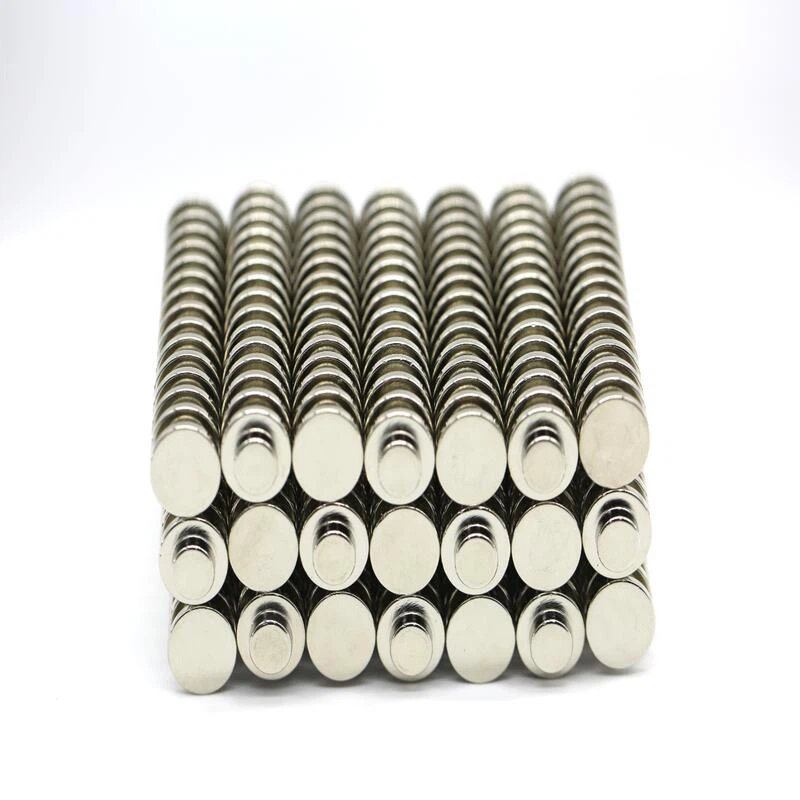
As a supplier of bullet - shaped magnets, we understand the unique characteristics of these specialized magnets. Bullet - shaped magnets are characterized by their streamlined form, with a pointed end and a rounded base. This shape gives them some specific magnetic properties compared to more conventional rectangular or cylindrical magnets.
Magnetic Field Distribution
The shape of a magnet significantly influences its magnetic field distribution. In bullet - shaped magnets, the magnetic field lines are concentrated at the pointed end. This creates a non - uniform magnetic field, which can be both an advantage and a challenge in magnetic refrigeration.
On one hand, a non - uniform magnetic field can potentially enhance the interaction between the magnet and the magnetocaloric material. Different regions of the magnetocaloric material can experience varying magnetic field strengths as it moves through the field of the bullet - shaped magnet, leading to a more complex but potentially more efficient entropy change process. On the other hand, the non - uniform field may also make it difficult to create a stable and reproducible refrigeration cycle.
Surface Area and Volume
The bullet shape offers a relatively large surface - to - volume ratio compared to some other simple geometric shapes. A larger surface area allows for better heat transfer between the magnet and its surroundings. In a magnetic refrigeration system, efficient heat transfer is crucial for removing the heat generated during the magnetization process and delivering the cold during the demagnetization process.

Mechanical Stability
The streamlined design of bullet - shaped magnets provides good mechanical stability. In a magnetic refrigeration system, magnets are often subject to mechanical forces, such as vibrations or impacts during operation. The bullet shape helps the magnet withstand these forces better, reducing the risk of damage and ensuring the long - term reliability of the system.
Potential Applications in Magnetic Refrigeration
Variable Magnetic Field Generation
One of the key requirements in magnetic refrigeration is the generation of a variable magnetic field. Bullet - shaped magnets, with their non - uniform magnetic fields, could be used to create a more complex magnetic field environment. By arranging multiple bullet - shaped magnets in a specific pattern, it may be possible to generate a magnetic field that varies continuously in strength and direction. This variable magnetic field could potentially enhance the magnetocaloric effect in the refrigeration material, leading to more efficient cooling.
Miniature Refrigeration Systems
For miniature or portable magnetic refrigeration systems, the unique shape and size of bullet - shaped magnets can be an advantage. Their relatively small volume and high mechanical stability make them suitable for applications where space is limited. For example, in electronic devices such as laptops or smartphones, where overheating can be a problem, a small - scale magnetic refrigeration system using bullet - shaped magnets could be developed to provide efficient cooling.
Hybrid Refrigeration Systems
Bullet - shaped magnets could also be used in hybrid refrigeration systems that combine magnetic refrigeration with other cooling technologies. For instance, in a system that uses both magnetic and thermoelectric cooling, the bullet - shaped magnets can be used to provide the initial magnetic field for the magnetocaloric material, while the thermoelectric elements can be used for fine - tuning the temperature or for additional cooling.
Other Related Magnet Shapes for Refrigeration
In addition to bullet - shaped magnets, there are other magnet shapes that are also relevant to magnetic refrigeration. Polygon Magnets offer unique magnetic field distributions due to their multiple sides and angles. These magnets can be arranged in complex configurations to create custom - designed magnetic fields that may be beneficial for specific magnetocaloric materials.
Oval Black Magnets have a rounded and elongated shape. Their smooth curves can facilitate the movement of the magnetocaloric material through the magnetic field, potentially reducing friction and wear. The oval shape also provides a moderate surface - to - volume ratio, which is favorable for heat transfer.
Step Magnet are characterized by their stepped profile. This shape allows for the creation of discrete regions with different magnetic field strengths, which can be used to control the magnetocaloric effect in a more precise manner.
Challenges and Considerations
While bullet - shaped magnets show potential for magnetic refrigeration, there are also several challenges that need to be addressed.
Material Compatibility
The choice of magnet material is crucial. The magnet must be able to operate effectively at the temperature range of the refrigeration system. In some magnetic refrigeration applications, the operating temperature can be quite low, and the magnet must maintain its magnetic properties under these conditions. Additionally, the magnet should not react chemically with the magnetocaloric material or other components of the system.
System Design
Designing a magnetic refrigeration system using bullet - shaped magnets requires careful consideration of the magnet's placement, orientation, and the movement of the magnetocaloric material. The non - uniform magnetic field of the bullet - shaped magnet makes the system design more complex compared to using conventional magnets. Computational modeling and experimental testing are often necessary to optimize the system performance.
Cost - effectiveness
The production of bullet - shaped magnets may be more expensive than that of simple - shaped magnets due to the more complex manufacturing process. In order for magnetic refrigeration systems using bullet - shaped magnets to be commercially viable, the overall cost of the system, including the cost of the magnets, must be competitive with traditional refrigeration technologies.
Conclusion
In conclusion, bullet - shaped magnets have the potential to be used in magnetic refrigeration systems. Their unique magnetic field distribution, surface - to - volume ratio, and mechanical stability offer several advantages for this application. However, there are also challenges related to material compatibility, system design, and cost - effectiveness that need to be overcome.
If you are interested in exploring the use of bullet - shaped magnets in magnetic refrigeration or other applications, I encourage you to contact me for a detailed discussion. We can work together to find the best magnet solutions for your specific needs. Whether you are a researcher in the field of magnetic refrigeration or an engineer looking for innovative magnet components, I am eager to assist you in your procurement process.
References
- Gschneidner, K. A., Pecharsky, V. K., & Tsokol, A. O. (2005). Recent developments in magnetocaloric materials. Reports on Progress in Physics, 68(6), 1479 - 1539.
- Nielsen, K. K., Bjørk, R., & Smith, A. I. (2011). Magnetic refrigeration. Journal of Physics: Condensed Matter, 23(31), 313201.
- Brück, E. (2005). Magnetocaloric materials. Journal of Magnetism and Magnetic Materials, 293(1), 83 - 101.


